What to Expect During ISR Lessons
What your child will learn, and the way he or she will learn it, is what makes ISR’s Self‐Rescue survival swimming program so different from traditional swimming lessons. Always putting safety first, ISR emphasizes competence, which leads to confidence, and provides the foundation for a lifetime of enjoyment in and around the water.
ISR lessons are designed for any child over 6 months of age. This is not a traditional swim class where they will be playing in the pool with other kids like a "Mommy and Me" or "Water Babies" class; this is a behaviorally based swim program that teaches survival swimming and Self-Rescue skills. This is a course designed to teach your child and their body how to respond and rescue themselves in a potential aquatic emergency situation. Parents do not get into the pool until the last week of lessons. (Read this comparison between ISR and traditional swim lessons.)
The ISR course takes approximately 6 weeks and is scheduled 5 days per week, Monday through Friday, for approximately 10 minutes each day. Children may begin lessons at 6-months of age, until 6-years of age. Lessons are always taught at your child’s emotional and physical pace with safety as the top priority. Since accidents don’t typically happen when a child is dressed in a bathing suit, completely skilled students will practice their skills fully clothed. What your child will learn depends on his or her age and developmental readiness, but in all cases, at minimum, your child will learn to roll onto his or her back to float, rest, and breathe, and to maintain this position until help arrives.
Students are scheduled according to the individual needs of the parent and student and contingent upon time slots becoming available as other students finish their course. Early registration is highly recommended to better accommodate the time and dates you desire. (Read this overview for more information.)
ISR is an extraordinary program and we are constantly striving to expand in order to eradicate the child drowning epidemic facing our children.
6-12 MONTHS OLD (ROLL-BACK-TO-FLOAT)
Your child is gently introduced to the water by the Instructor. As each child reacts differently, the Instructor will work with your child to guide him through the lesson process and to build a level of trust and comfort in the water. Once this is established, your child will begin to learn how to Self-Rescue.
Think of how your child learned to roll from stomach to back as a young baby. A child 6-12 months will learn:
To hold their breath underwater
To roll onto their back
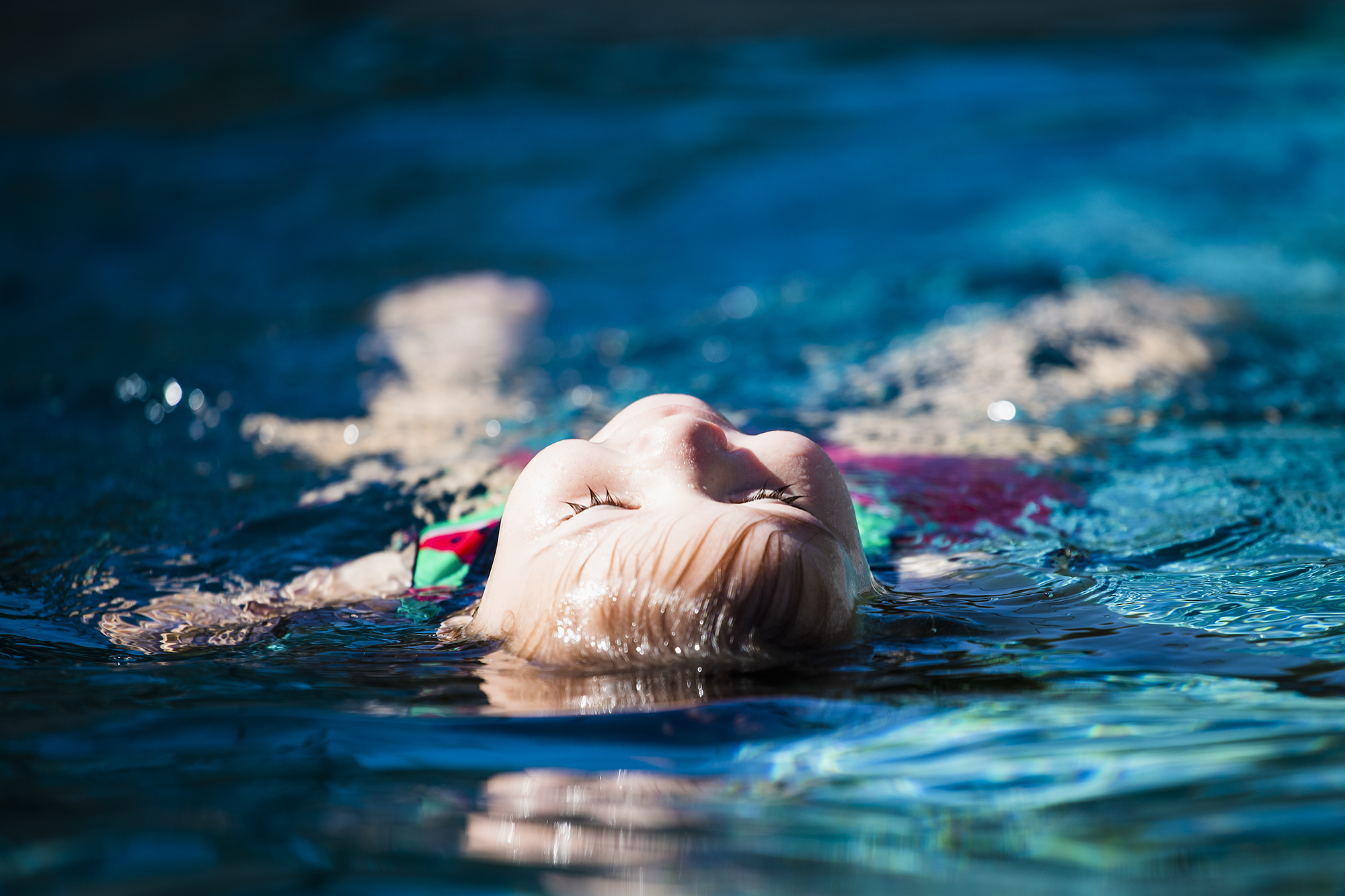
To float unassisted, rest and breathe until help arrives
To perform these Self-Rescue skills first in a swim diaper, then while fully clothed
~1-6 YEARS OLD (SWIM-FLOAT-SWIM)
You've seen it before, your toddler walks right to the edge of the pool, ready to jump in, whether or not you are there to catch him. His confidence is beyond his skills. Once your child is walking well - typically by the age of one - his increased physical abilities allow him to learn more advanced skills in the water. ISR training for children between ~1 and 6 years of age uses their confidence to help them build competence and the skills to Self-Rescue.
Your ISR Instructor will work with your child's initial skills to help him gain both competence and confidence around the water. ISR has a deep passion for water safety and will not make your child over-confident or fearless, but will educate your child and teach them a healthy respect for the water.
Children 1-6 years learn the following sequence:
To hold their breath underwater
Swim with their head down
Roll onto their back to float, rest, and breathe
Roll back over to resume swimming until they reach the side of the pool, crawl out or be rescued by an adult
To perform these Self-Rescue skills first in a swim diaper, then while fully clothed
Ready to Get Started?
Discover more about our programs and how we can help you.